How do you find the perfect entry on a meme coin without chasing the pump?
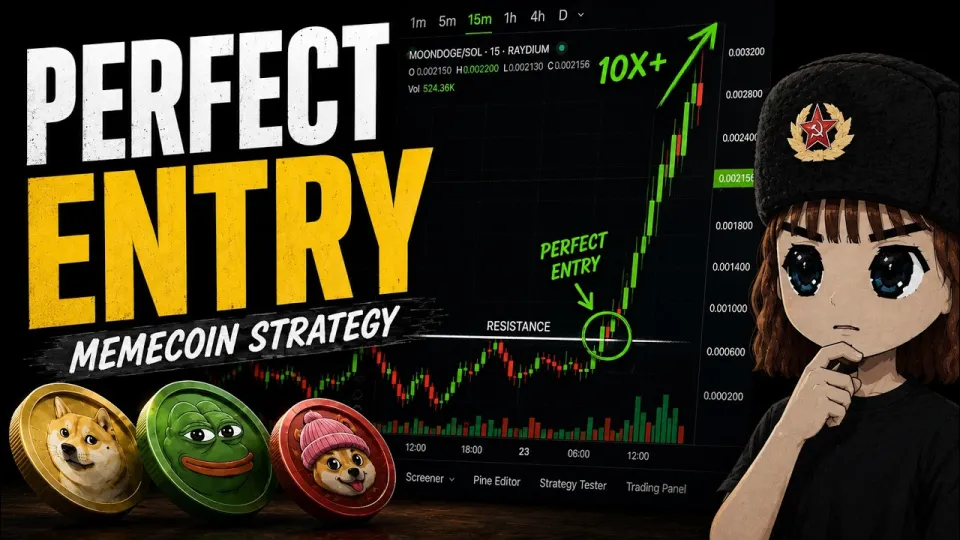
Video: How I Find the PERFECT Entry on Memecoins 📈 (Full Strategy)
Want articles like this for your own video to promote it on YouTube and Google? Order them through the Telegram bot @sat_sit_bot. Articles with your video embedded are written and posted by the bot itself — on popular topical sites (no ads). Try it free: 50 articles on us.
· based on the channel starwifpump
A meme coin entry is the price level where momentum, structure and risk all line up before you click buy — not the moment a green candle appears on your screen. In practice that means waiting for confirmation of demand, buying a pullback or a support retest, and knowing your invalidation level before the position exists. The full workflow behind that idea is broken down on the starwifpump channel, and the fastest way to follow the tooling used there is the Plasma Telegram early-access channel.
Why the meme coin entry matters more than the pick
Most meme coin traders do not lose because they chose the wrong token; they lose because they bought at the wrong moment. A coin can be a genuinely good narrative and still produce a terrible trade if you enter after a vertical move, when the only buyers left are retail chasing the same candle. Entry price sets everything downstream: your stop distance, your position size, your realistic upside, and whether a normal 20% pullback is a buying opportunity or a liquidation event.
The same chart can be a great trade or a bad one depending on where you stand in it. That is why the process in the video is built around setups and confirmations rather than around narratives or callouts.
The entry checklist used before any buy
A repeatable checklist removes emotion from the decision, because the question stops being "will this go up?" and becomes "does this chart meet my conditions?". The sequence below is the practical order of operations.
- Confirm the trend structure. Higher highs and higher lows on the timeframe you trade, with the token holding above a level that previously acted as resistance.
- Check momentum quality, not momentum size. Volume expanding on up-moves and contracting on pullbacks is healthy; volume that spikes only on the final vertical candle usually is not.
- Wait for the pullback. The entry is taken on a retest of broken resistance, a moving-average reclaim, or a higher-low formation — not on the extension itself.
- Define invalidation first. Identify the price where the setup is simply wrong, then size the position so that level costs an acceptable percentage of the account.
- Set exits before entry. Partial profit targets on the way up, a trailing plan for the remainder, and a hard rule for the stop.
If any of those five steps is missing, the trade is a pass. Skipping a mediocre setup costs nothing; forcing one costs capital.
How to read momentum without chasing the pump
Momentum is information about who is still buying, and the skill is reading it early rather than late. A token that has already printed several consecutive large green candles on a low-cap meme coin is usually in the phase where early wallets distribute into late buyers. The healthier signal is a steady climb with shallow pullbacks that get bought quickly, plus growing holder count and consistent volume across several candles rather than one spike.
A useful practical filter is to compare the size of the last impulse to the size of the previous one. If each push is smaller while volume stays flat or declines, demand is thinning even though the chart still looks green. On Solana meme coins, where new pairs launch constantly, that thinning often precedes a fast retrace, which is exactly the candle beginners buy.
Pullbacks and support levels as entry zones
A pullback is only useful if you know which level should hold, so mark those levels before the move happens. The zones worth watching on a meme coin chart are the breakout level that was just reclaimed, the consolidation range high from the accumulation phase, and the area where the previous higher low formed. When price returns to one of those zones and buyers step in with volume, you get a defined entry with a tight, logical stop just below the level.
This is also where risk-to-reward improves dramatically. Buying an extension gives you a wide stop and a small target; buying a clean retest gives you a narrow stop and the same target. Same coin, same thesis, completely different trade.
Red flags that mean skip the trade
The most valuable chart skill is knowing when not to enter, because a skipped trade never becomes a loss. The clearest warning signs are a failed breakout where price reclaims a level and immediately loses it, a vertical candle on declining volume, a lower high forming after a breakdown, and a chart where every pullback is deeper than the last. Thin liquidity and a spread that widens on sells are also structural reasons to stay out regardless of how good the narrative looks.
A second category of red flag is behavioural: entering because you saw a callout, because the chart is up 300% and you fear missing it, or because you already lost on the coin and want it back. None of those are setups.
Planning risk and exits before the entry
Risk planning happens before the order, not after it. A workable template is to risk a fixed small percentage of the account per trade, place the stop below the invalidation level rather than at a round number, and take partial profits into strength so the trade becomes risk-free before the volatile phase. Meme coins can move 50% in minutes in both directions, so a plan written in advance is the only thing that survives the emotion of the moment.
Position sizing follows from the stop distance: the wider the invalidation level, the smaller the size. That single rule prevents the most common meme coin failure, which is a small account taking a full-size position on a chart with no clear stop.
Common questions from newer traders
Beginners tend to ask the same things: which chain is best for meme coins right now, whether the same entry rules apply on newer chains and launchpads, how to filter the endless stream of new tokens, and how to track the social catalysts that move a coin. The honest answer is that the entry framework is chain-agnostic — structure, momentum and liquidity behave the same way on Solana, on Ethereum, and on newer ecosystems — while the tooling and the speed of the game differ. Filters on a tracker should narrow by liquidity, age and volume rather than by hype, and social monitoring is a supplement to the chart, never a replacement for it.
It is also worth saying plainly that many people lose money on meme coins and stop; that outcome usually comes from position sizing and timing, which are exactly the two things a written entry checklist controls.
Useful links
- Plasma Telegram early access — terminal access, updates and setup help
- https://discord.com/invite/fr6zzYyBxC — Discord community
- https://trade.padre.gg/rk/star — Padre trading terminal
- https://solpump.com/a/STARGOAT — Solpump
- https://x.com/starwifpump — starwifpump on X
Bottom line
A good meme coin trade is built from a confirmed structure, a pullback into a marked level, a predefined invalidation point and a position size that survives being wrong. The coin itself is only half the battle; the entry decides whether the same chart is a controlled risk or a gamble. Treat the checklist as a filter that rejects most candidates, and the few trades that pass will have a far better risk-to-reward than anything bought out of FOMO. The full strategy breakdown comes from the starwifpump channel, and the tooling referenced there is available through the Plasma Telegram early-access link.
Key takeaways
- Most meme coin losses come from bad timing, not bad coin selection — entry price decides the risk-to-reward of the whole trade.
- A quality setup needs momentum confirmation plus a pullback or support retest, not a green candle bought out of FOMO.
- Invalidation signals (failed breakout, fading volume, no higher low) are reasons to skip a trade, not to average down.
- Risk, exit levels and profit-taking targets are planned before the entry, not adjusted emotionally after it.
- Tools used in the video's workflow: Plasma terminal, Axiom, GMGN, Padre and Bloom sniper, with early-access access via Telegram.
Source: How I Find the PERFECT Entry on Memecoins 📈 (Full Strategy) · Markdown version
Questions & answers
Do I need a special terminal to trade meme coins, or is a normal exchange enough?
A standard exchange works for larger, listed meme coins, but new launches on Solana and similar chains usually require a dedicated terminal or bot for speed and for reading liquidity. Tools mentioned around the video include Plasma, Axiom, GMGN, Padre and a sniper bot. Whatever you use, the entry checklist stays the same — the tool only changes how fast you can act.
Are the same entry rules valid on every chain and launchpad?
Largely yes. Structure, momentum, pullback zones and invalidation levels are chart concepts that behave similarly across chains. What changes is liquidity depth, launch mechanics and how fast a chart can move, so position sizing should be more conservative on newer, thinner ecosystems.
How do I filter the huge number of new meme coins without wasting hours?
Use tracker filters built around objective criteria: minimum liquidity, token age, volume relative to market cap, and holder distribution. Then apply the chart checklist only to the shortlist. Social monitoring of catalysts is useful context, but it should confirm a setup rather than create one.
I lost money on meme coins before — is it worth trying again?
Only with a different process. Most losses come from oversized positions and entries taken after a vertical move, so a fixed small risk per trade, a predefined stop and a rule of skipping setups that fail the checklist change the outcome more than a new coin pick does. If the risk is not acceptable to lose entirely, the honest answer is to stay out.